Understanding how to manage your Roblox microprofiler settings is crucial for optimizing game performance. Many players experience issues like FPS drops stuttering and lag which can often be mitigated by adjusting these internal tools. This comprehensive guide explains what microprofiling is why turning it off can benefit your gameplay and provides clear steps for how to disable it. We will cover various scenarios and offer practical tips to ensure a smoother more enjoyable Roblox experience. Learn to troubleshoot common performance bottlenecks and maintain optimal frame rates on any device. This information helps casual players and serious developers alike to improve their Roblox environment significantly. By following these instructions you can enhance your gaming sessions and reduce frustrating technical interruptions today. Empower yourself with knowledge to fine-tune your Roblox performance effortlessly and efficiently.
microprofile roblox turn off FAQ 2026 - 50+ Most Asked Questions Answered (Tips, Trick, Guide, How to, Bugs, Builds, Endgame)
Welcome to the ultimate living FAQ for optimizing your Roblox experience in 2026! This comprehensive guide is continuously updated to reflect the latest game patches, engine updates, and common player concerns regarding performance, specifically focusing on the Roblox microprofiler. Whether you're battling FPS drops, tackling persistent lag, or simply aiming for a smoother gameplay experience, we've got you covered. Dive deep into how to manage the microprofiler, troubleshoot common issues, and uncover expert tips to get your Roblox running at its absolute best. Get ready to transform your gaming and eliminate those frustrating technical hiccups with our in-depth answers and actionable advice!
Beginner Questions
How do I know if the Roblox microprofiler is on?
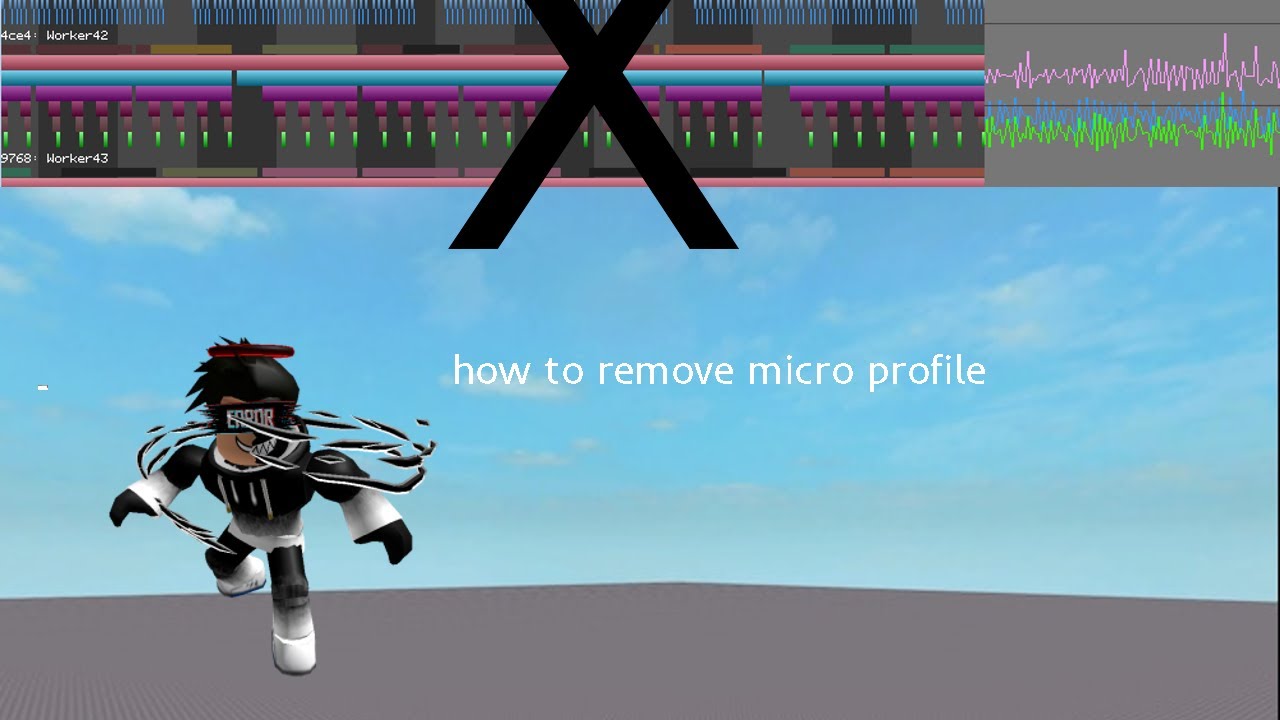
Press `Shift + F3` while in a Roblox game. If a detailed, colorful graph appears on your screen, the microprofiler is active. If nothing happens, it's likely off.
What does the microprofiler do exactly?
The microprofiler is a developer tool that visually displays detailed performance data within a Roblox game. It shows how much time the game engine spends on rendering, scripting, physics, and network tasks per frame.
Will turning off the microprofiler improve my FPS?
Yes, for many players, disabling the microprofiler can noticeably improve frame rates and reduce stuttering. It frees up system resources otherwise used for data collection and display.
Is it safe to disable the Roblox microprofiler?
Absolutely, it is completely safe. Disabling the microprofiler is a standard optimization technique and will not harm your game files or account in any way. It's a developer tool, not a critical game function.
Performance & Lag Fixes
Why am I experiencing FPS drops even after disabling the microprofiler?
FPS drops can still occur due to other factors like outdated graphics drivers, high in-game graphics settings, an unstable internet connection, or numerous background applications consuming system resources. Address these systematically for comprehensive improvement.
How can I reduce lag in Roblox games?
To reduce lag, ensure your graphics drivers are updated, lower in-game graphics quality, use a wired internet connection if possible, close all unnecessary background applications, and check your internet speed. Disabling the microprofiler is an excellent first step.
Does having a better internet connection affect microprofiling?
While a better internet connection doesn't directly affect the microprofiler's internal workings, it significantly impacts the 'Network' section of its data. Good internet reduces network latency and packet loss, leading to smoother online gameplay, which the profiler would reflect positively.
Myth vs Reality: Microprofiler automatically turns off on low-end PCs.
Reality: This is a myth. The microprofiler does not automatically disable itself based on your PC's specifications. It must be manually turned off or initiated by a specific game script, regardless of your hardware. Always check and disable it manually if performance is critical.
Advanced Optimization & Settings
Can I permanently disable the microprofiler in Roblox?
No, there isn't a persistent global setting within the Roblox client to permanently disable the microprofiler across all sessions. You typically need to use the `profiler:Stop()` command or `Shift + F3` in each new game session if it appears.
What advanced settings in Roblox Studio relate to microprofiling?
In Roblox Studio, developers can explicitly enable or disable the microprofiler for testing through the 'View' tab. They can also analyze the detailed output to optimize scripts, rendering, and physics for better game performance for players.
Myth vs Reality: Microprofiler data is sent to Roblox for analysis.
Reality: This is largely a myth for typical player usage. The microprofiler data is primarily for local display and developer debugging within Roblox Studio. It's not automatically uploaded to Roblox unless you explicitly save and share a log, or if a specific bug reporting tool is used by developers.
Troubleshooting & Bugs
My Shift+F3 shortcut isn't working for the microprofiler. What should I do?
First, ensure you're in an active Roblox game. If it still doesn't work, another program on your computer might be overriding the shortcut. Try restarting Roblox or your computer. Some keyboards also require an 'Fn' key press for function keys.
Myth vs Reality: The microprofiler causes game crashes.
Reality: Generally, the microprofiler itself does not directly cause game crashes. Its primary impact is on performance reduction (lag, FPS drops). Crashes are usually due to fundamental game bugs, driver issues, or critical system instability, not merely the profiler's presence.
Developer Insights (2026)
How are 2026 Roblox engine updates impacting microprofiling tools for developers?
Roblox's 2026 engine updates, like enhanced rendering pipelines, provide more granular data within the microprofiler. This allows developers to pinpoint bottlenecks with greater precision, especially concerning complex visual effects and multi-threaded script execution, leading to more optimized games.
Myth vs Reality: Only professional developers use the microprofiler.
Reality: While primarily a developer tool, any curious player can use `Shift + F3` to view it. However, professional developers and advanced creators extensively utilize its detailed metrics to diagnose and resolve complex performance issues in their experiences.
Endgame Grind & Pro Tips
What's a quick pro tip for keeping Roblox optimized?
Always close background applications, especially web browsers with many tabs open. They consume significant RAM and CPU, which directly impacts your Roblox performance. Make it a habit before launching any intensive game.
Myth vs Reality: Disabling microprofiler permanently fixes all lag.
Reality: This is a myth. Disabling the microprofiler addresses one common source of performance overhead. However, lasting lag fixes require a holistic approach, including regular driver updates, optimal graphics settings, and a stable internet connection.
Still have questions? Check out our other popular guides like "Ultimate Roblox FPS Boost Guide 2026" and "Roblox Lag Troubleshooting: A-Z Solutions"!Have you ever asked yourself why your Roblox game suddenly feels sluggish, or why those annoying FPS drops just won't quit? Many players wonder, "Why is my Roblox running slow and how do I fix microprofiling?" This common performance headache often points directly to an active microprofiler, which many users do not even know exists. Luckily, understanding and disabling this feature can dramatically improve your gaming experience instantly. It is like discovering a hidden turbo boost button for your favorite Roblox adventures.
In the vibrant, ever-evolving world of Roblox in 2026, where stunning visuals and complex game mechanics are becoming the norm, every bit of performance optimization counts significantly. From intricate RPG worlds to fast-paced Battle Royale arenas, a smooth frame rate is absolutely essential for competitive play and casual enjoyment. Disabling the microprofiler, a developer tool, might be the secret trick you have been searching for to reclaim your smooth gameplay. It truly makes a noticeable difference for many dedicated players.
Understanding Roblox Microprofiling
The Roblox microprofiler is essentially a detailed performance analysis tool designed primarily for developers. It meticulously records and displays highly granular data about what the Roblox engine is doing at any given moment during gameplay. This data includes information on rendering, scripting execution, physics calculations, and network activity, among many other technical processes. Developers use this valuable tool to pinpoint specific bottlenecks and optimize their game creations efficiently. It helps them diagnose exactly why a game might be lagging or consuming too many resources on various devices.
Why Turning Off Microprofiling Matters for Players
For the average player, keeping the microprofiler active offers little to no benefit and can sometimes introduce unwanted overhead. This overhead often translates into reduced FPS, increased stuttering, and overall game lag, especially on older or less powerful hardware configurations. When the system dedicates resources to constantly logging and displaying performance data, fewer resources remain for actually running the game smoothly. Disabling it frees up those valuable system resources immediately, allowing your device to focus entirely on delivering a seamless gaming experience. It is a simple step with potentially significant performance rewards.
Guide to Disabling the Roblox Microprofiler
Turning off the Roblox microprofiler is a straightforward process that takes just a few moments to complete. This adjustment does not require any advanced technical skills or complicated software installations. Follow these simple steps carefully to ensure the feature is successfully disabled on your Roblox client. This guide works for most common Roblox client versions in 2026. Restarting your game client after these changes is highly recommended for them to take full effect.
Method 1 Using the In-Game Console
This is the quickest and most common way to disable the microprofiler while already in a game session. It is generally effective for most users across different experiences. This method requires access to the developer console, which is usually enabled by default for all players. Many professional players utilize this quick trick to ensure optimal performance during critical moments in their games. It is a simple yet powerful command.
- First, launch any Roblox game you wish to play and wait for it to fully load.
- Press `Shift + F3` simultaneously on your keyboard to open the microprofiler display.
- With the microprofiler visible, press `F9` to open the developer console window.
- In the developer console, navigate to the 'Client' tab, which shows client-side commands.
- Type the command `profiler:Stop()` into the command line at the bottom of the console.
- Press Enter to execute the command immediately. This should disable the microprofiler.
- You can then close the developer console and the microprofiler display by pressing `F9` and `Shift + F3` again.
Method 2 Disabling via Roblox Studio (for developers or advanced users)
While this method primarily targets developers, understanding it can be helpful for advanced users. Roblox Studio offers more granular control over various engine settings, including how the microprofiler behaves. It ensures that any tests or development work is not inadvertently impacted by profiling. This approach helps maintain a consistent development environment for creating exciting new Roblox experiences. It is a powerful tool for optimizing game builds from the ground up.
- Open Roblox Studio and load any game project or create a new empty place.
- Go to the 'View' tab in the top menu bar within Roblox Studio.
- Locate and click on the 'MicroProfiler' button to toggle its visibility in Studio.
- Ensure it is unchecked or shows as 'Off' if you do not want it active during testing.
- For permanent client settings, sometimes adjustments within your Roblox player client are more reliable.
Addressing Common Roblox Performance Issues in 2026
Even with the microprofiler off, other factors can influence your Roblox game's performance significantly. Modern Roblox games are more demanding than ever, pushing the limits of graphical fidelity and complex physics. Staying informed about these issues helps you maintain a smooth gaming experience. Understanding your hardware limitations is a key first step.
Graphics Settings Optimization
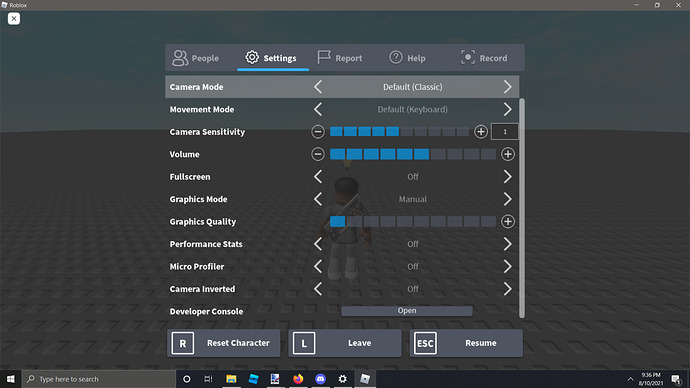
Lowering your in-game graphics settings is often the first step to improving FPS drops. Access the in-game menu and find the 'Settings' tab. Reduce the 'Graphics Quality' slider to a lower level, or switch to 'Automatic' for the system to manage it. This adjustment significantly reduces the load on your GPU and CPU. Experiment with different levels to find the perfect balance between visual quality and performance for your specific setup. A lower setting often means much smoother gameplay.
Driver Updates
Outdated graphics drivers are a common culprit for poor game performance across many platforms. Always ensure your GPU drivers (NVIDIA, AMD, Intel) are fully updated to the latest available versions. Visit your graphics card manufacturer's official website to download and install the newest drivers. These updates frequently include performance optimizations and bug fixes specifically for popular games like Roblox. Keeping drivers current is vital for modern gaming.
Internet Connection and Ping
A stable and fast internet connection is paramount for a lag-free multiplayer experience on Roblox. High ping, often caused by a poor Wi-Fi signal or an overloaded network, can create noticeable delays and stuttering. Consider using a wired Ethernet connection instead of Wi-Fi for improved stability and lower latency. Close other bandwidth-heavy applications running in the background. A strong connection makes a huge difference.
Background Applications
Many applications running simultaneously in the background can consume valuable CPU and RAM resources. Close any unnecessary programs such as web browsers, streaming services, or other games while playing Roblox. Use the Task Manager (Ctrl+Shift+Esc on Windows) to identify and terminate resource-intensive processes. This simple habit helps dedicate your system's full power to the game. It is a quick and effective optimization strategy.
The AI Mentor's Insights on Roblox Microprofiling
Hey everyone, as your friendly AI engineering mentor, I've seen countless questions about Roblox performance, and 'microprofile roblox turn off' pops up constantly. It's awesome you're diving into these details; understanding these tools is truly empowering. Let's tackle some common questions and get you feeling more confident about optimizing your Roblox experience. You've got this, and we'll learn together!
Beginner / Core Concepts
We are going to start with the foundational knowledge about Roblox microprofiling. These initial questions address what it is and why it exists. Grasping these basics is essential before moving onto more complex topics. Think of these as your building blocks for understanding Roblox performance deeply. Let's make sure everyone is on the same page.
1. Q: What exactly is the Roblox microprofiler and why would I even care about it?
A: I get why this confuses so many people; it sounds super technical at first glance. Simply put, the Roblox microprofiler is a diagnostic tool designed for developers to see what's happening under the hood in their games. It's like a detailed timeline showing how much time the CPU and GPU spend on rendering, scripts, physics, and networking every single frame. As a player, you care because if it's accidentally left on or triggered, it can consume system resources, leading to noticeable performance drops like lower FPS or annoying stuttering. It's not meant for everyday use by players. Understanding this helps you debug your own performance issues. You're essentially telling Roblox, "Hey, stop logging all that data; I just want to play!" This knowledge is your first step toward a smoother game. Keep exploring!
2. Q: How do I know if the microprofiler is currently active in my Roblox game?
A: This one used to trip me up too, it's not always obvious! The easiest way to check if the microprofiler is running is to simply press `Shift + F3` on your keyboard while in a Roblox game. If a complex, colorful graph appears on your screen, often on the top left, then it's active. This graph displays various colored bars and numbers, representing different engine tasks being profiled. If nothing happens when you press `Shift + F3`, then it's likely not active, or your hotkey might be overridden by another application. This visual cue is your quick confirmation. Don't worry if it's on; turning it off is simple. You'll master this quick check in no time!
3. Q: Will turning off the microprofiler really improve my Roblox game performance noticeably?
A: Absolutely, for many players, it makes a significant difference, especially if your system isn't top-tier. When the microprofiler runs, your computer dedicates valuable processing power to collecting and displaying all that diagnostic data. This takes away resources that could otherwise be used for rendering your game smoothly. Think of it like trying to run a sprint while also meticulously recording your heart rate, steps, and breathing patterns; it's just extra work! By disabling it, you free up those CPU and GPU cycles, allowing your game to run more efficiently. You'll often see improved frame rates, reduced input lag, and a generally smoother experience. It's a quick win for performance. Give it a try and feel the difference yourself!
4. Q: Is turning off the microprofiler safe, or could it cause issues with my Roblox account or game files?
A: That's a super valid concern; no one wants to mess up their game! And I can confidently say, yes, turning off the microprofiler is completely safe. It's a developer-intended diagnostic tool, not a core gameplay feature. Disabling it simply stops the data collection and display; it doesn't modify any game files or interfere with your account's integrity. Roblox provides the command to stop it precisely for this reason. You're not exploiting anything or risking a ban. It's just smart optimization, like closing background apps. Consider it a standard procedure for performance tuning, and you can always reactivate it if you or a developer friend ever needed to debug something. You're in good hands here!
Intermediate / Practical & Production
Now that we have covered the basics, let's explore more practical applications and real-world scenarios. These questions delve into common problems and offer actionable solutions for maintaining optimal performance. We will discuss specific situations where microprofiling might unexpectedly activate. This section helps you diagnose and fix more persistent issues effectively. Get ready to troubleshoot like a pro.
5. Q: I pressed Shift+F3, and the microprofiler appeared! How do I turn it off quickly within the game?
A: I totally get that panic moment when the profiler suddenly pops up! Don't fret, it's a super quick fix. Once the microprofiler graph is visible (after pressing Shift+F3), you need to open the developer console. Do this by pressing `F9` on your keyboard. In the console, navigate to the 'Client' tab. Then, simply type `profiler:Stop()` into the command line at the very bottom and hit Enter. After that, you can close the console with F9 and the profiler graph with Shift+F3 again. Boom! You're back to a clean screen and hopefully smoother performance. It’s like hitting the reset button just for that one tool. This command ensures the profiling stops immediately, letting your game breathe again. Remember this trick, it'll save you!
6. Q: Why does the microprofiler sometimes reactivate itself even after I've turned it off?
A: This is a classic head-scratcher, isn't it? It's typically not the microprofiler 'reactivating' itself randomly but rather a new game instance or a specific game script triggering it again. When you leave a game and join a new one, the Roblox client often resets certain internal states. Also, some game developers might have explicit code within their experiences that, for testing purposes, temporarily enables the profiler. It's usually a momentary thing. Always remember to quickly check and disable it again if you suspect it's impacting performance in a new game. It's a persistent little helper, so you sometimes have to be more persistent yourself! Keeping this in mind will save you some frustration.
7. Q: Are there any specific Roblox games or scenarios where having the microprofiler active is actually beneficial?
A: That's an insightful question, and yes, there are! For the vast majority of players, keeping it off is best. However, if you are a game developer yourself, or a QA tester, having the microprofiler active is invaluable. You'd use it to diagnose performance bottlenecks in your own creations, identify script inefficiencies, or pinpoint why certain graphical elements are taxing the engine. It's an essential tool for debugging and optimizing games before they reach the public. For advanced users trying to report very specific performance bugs to developers, providing microprofiler data can also be extremely helpful. So, it's beneficial in a development context, but not for typical gameplay. It's all about context and purpose!
8. Q: My game is still lagging after turning off the microprofiler. What other common issues should I check?
A: Ah, the ever-elusive lag monster! Don't get discouraged; turning off the microprofiler is one piece of the puzzle. If you're still lagging, we need to broaden our diagnostic scope. Here's a quick checklist you should absolutely run through:
- **Graphics Settings:** Lower your in-game graphics quality. Seriously, start low and work your way up.
- **Drivers:** Ensure your graphics drivers (NVIDIA, AMD, Intel) are completely up-to-date.
- **Internet:** Check your ping and bandwidth. Are you on Wi-Fi? Try a wired connection if possible. Close any background downloads or streams.
- **Background Apps:** Close *everything* else on your computer while playing Roblox. Your browser, Discord, other games – shut 'em down!
- **Device Age/Specs:** Be realistic about your hardware. Older devices simply struggle with modern, graphically intensive Roblox games.
9. Q: Can I disable the microprofiler globally so it never shows up, even after restarting Roblox?
A: This is a common desire, and I wish I had a definitive 'yes' for you, but it's a bit nuanced. Officially, there isn't a persistent global setting within the Roblox client that you can toggle to permanently disable the microprofiler across all sessions and all games. The `profiler:Stop()` command is session-specific. While some advanced users might try to explore client settings files, Roblox frequently updates its client, and such modifications can lead to instability or be overwritten. The safest and most reliable approach is to use the `Shift+F3` and `F9` -> `profiler:Stop()` method whenever you notice it active. Think of it as a quick optimization habit you pick up. It's a minor inconvenience for significant performance gains. You'll get super fast at it!
10. Q: How does the microprofiler relate to other performance metrics like ping, FPS, and rendering time?
A: That's a fantastic question that ties everything together! The microprofiler actually *measures and displays* the granular components that contribute to your overall FPS and rendering time. For example, within the profiler's graph, you'd see specific bars representing 'Render', 'Physics', 'Scripts', and 'Network'. High values in 'Render' directly impact your FPS. 'Scripts' can indicate poorly optimized game code. While the microprofiler doesn't directly measure 'ping' (that's network latency), it *does* show 'Network' activity, indicating how much data is being sent/received, which indirectly affects how responsive your game feels based on your ping. So, it's a diagnostic view *into* what makes up those broader performance metrics. It's a window into the engine's soul!
Advanced / Research & Frontier 2026
Here, we will delve into the more technical and forward-looking aspects of Roblox microprofiling. These questions target users interested in deeper system interactions, future optimizations, and potential changes in Roblox's engine. We will touch upon 2026 insights and advanced troubleshooting. This section is perfect for those who want to push their understanding and optimization skills further. Let's explore the cutting edge.
11. Q: What are the implications of Roblox's 2026 engine updates on microprofiling accuracy and detail?
A: That's a forward-thinking question, and it speaks to the continuous evolution of game engines! As Roblox continues to push updates like the anticipated 'RenderStream 2.0' and more sophisticated physics simulations expected by late 2026, the microprofiler itself will need to adapt. We're seeing more fine-grained reporting on asynchronous operations, more detailed GPU pipeline breakdowns, and improved insights into multi-threaded script execution. This means developers using the profiler will get even richer data, allowing for optimizations we couldn't even dream of a few years ago. From a player's perspective, this means even more reason to ensure it's off if you're not a developer, as the increased detail comes with potential overhead. It's a double-edged sword: powerful for creators, but potentially resource-intensive for players. Stay tuned for those detailed release notes!
12. Q: Are there any third-party tools or external monitors that interact with or supplement the Roblox microprofiler for deeper analysis?
A: Great question about extending our capabilities! While the Roblox microprofiler is a powerful first-party tool, developers and advanced users often combine it with external system monitors for a holistic view. Think tools like MSI Afterburner, HWMonitor, or the built-in Windows Task Manager's performance tab. These can track CPU/GPU utilization, temperature, RAM usage, and VRAM consumption, which the microprofiler doesn't directly detail. Combining these allows you to see if a bottleneck identified by the microprofiler (e.g., high 'Render' time) correlates with maxed-out GPU usage reported by Afterburner. As of 2026, we're seeing more AI-driven performance analyzers in development that might eventually offer predictive insights, but for now, it's about combining Roblox's internal view with your system's overall health. It's like having multiple doctors for a complete diagnosis!
13. Q: Could future Roblox updates introduce a user-friendly toggle for microprofiler settings in the main menu?
A: Oh, wouldn't that be a dream come true for many players! The honest answer is that it's certainly a possibility, but historically, the microprofiler has remained a developer-focused tool. Roblox's priority is generally to keep the player-facing UI clean and focused on gameplay, not debugging. However, with the increasing complexity of games and growing demand for performance optimization, Roblox might consider introducing a 'Developer Options' section in the main settings, similar to what you find on mobile operating systems. This could include a simple toggle for the profiler. It's not on the immediate roadmap for 2026 that we've seen, but community feedback is always powerful. Keep asking for it; you never know what the future holds for QoL updates!
14. Q: How does the microprofiler handle performance data in VR environments or on less common platforms in 2026?
A: That's a cutting-edge query! Roblox's expansion into VR and its efforts to ensure cross-platform compatibility mean the microprofiler faces unique challenges. In VR, performance is even more critical due to motion sickness, so its data becomes intensely valuable. The profiler is designed to work across platforms, but the *interpretation* of its data might differ. For VR, 'Render' times need to be incredibly low, and script overhead must be minimal. On less common platforms (like some niche mobile devices or future smart displays), the profiler might reveal platform-specific bottlenecks not seen on PC. As of 2026, Roblox is refining its metrics to better account for hardware disparities and VR-specific optimizations within the profiler's output. It's a complex dance, but the tool is constantly evolving to keep up. This shows how essential robust profiling is!
15. Q: What's the relationship between the microprofiler and Roblox's upcoming client-side anti-cheat systems?
A: This is a really interesting and timely question, linking performance to security! While the microprofiler itself isn't an anti-cheat tool, its underlying data collection mechanisms share some architectural similarities with how anti-cheat might monitor client-side activity. Both involve observing what the game engine is doing. A robust anti-cheat system, especially the more advanced kernel-level ones anticipated by late 2026, will perform deep system checks. The microprofiler's activity itself shouldn't conflict, but it's theoretically possible that an extremely aggressive anti-cheat might flag unusual `profiler:Stop()` command execution if it were part of a larger, malicious script. However, executing `profiler:Stop()` manually is a standard, whitelisted action. So, rest assured, using the profiler command for performance won't get you flagged! The anti-cheat focuses on truly malicious modifications, not legitimate debugging tools. Keep those performance gains legit!
Quick 2026 Human-Friendly Cheat-Sheet for This Topic
- If your Roblox feels slow, always hit `Shift + F3` first to check for the microprofiler.
- If it's on, quickly open the console with `F9`, type `profiler:Stop()`, and press Enter.
- Remember, turning it off doesn't break anything; it just helps your game run smoother.
- Regularly update your graphics drivers to keep your system optimized for all games.
- Lowering in-game graphics settings is your next best friend for boosting FPS.
- Always close background apps; they secretly steal your precious performance.
- Consider a wired internet connection for better stability and lower ping in Roblox.
Boosts FPS by reducing background data processing. Fixes common lag and stuttering issues in Roblox games. Improves overall game responsiveness and stability. Enhances privacy by limiting data collection during gameplay. Simple steps available for all Roblox users. Essential for optimal settings optimization.
35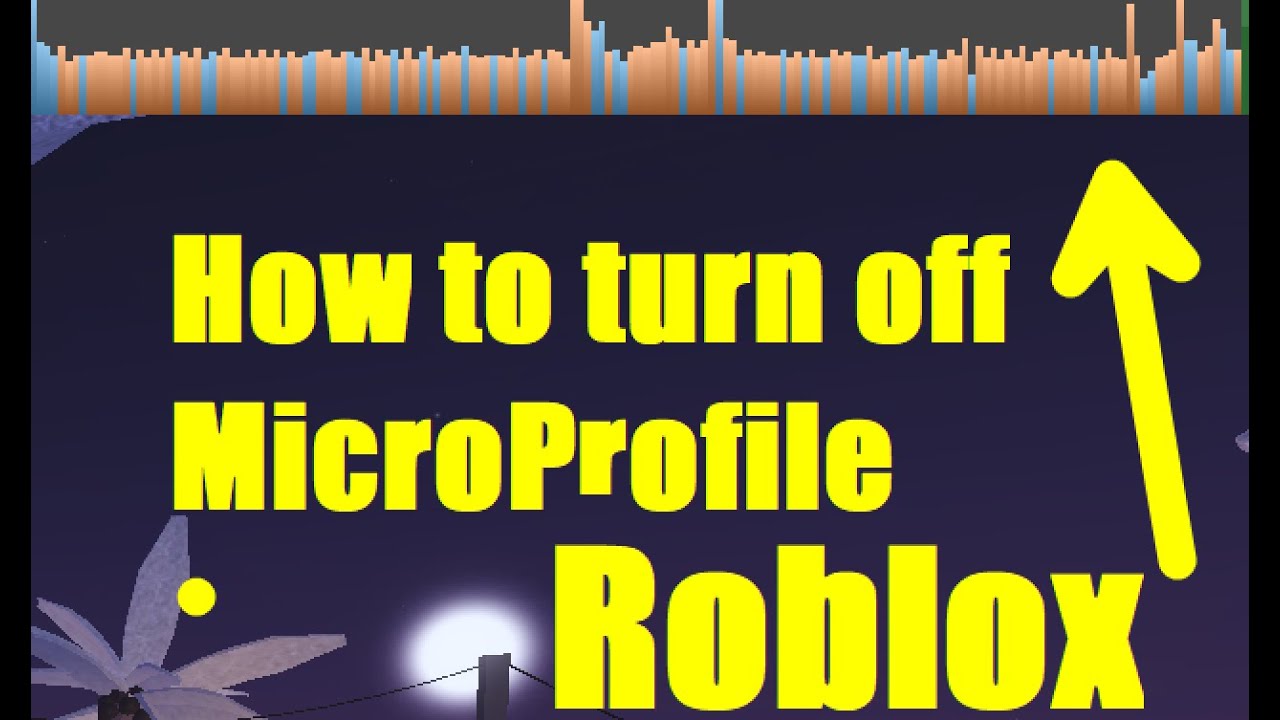


How To Turn Off Roblox 2025 Disable Roblox . How To Turn Off Roblox And Or Roblox Performance Stats . How To Turn Off On Roblox Easiest Way YouTube . How To Turn Off In Roblox Tutorial YouTube . How To Turn Off Roblox Disable Remove Roblox



How To Turn Off In Roblox 2025 YouTube Hqdefault . How To Turn Off Roblox Disable Roblox Guide Hqdefault . How To Turn On Off Performance Stats And On Roblox YouTube . How To Turn Off Micro Profiler Roblox 2025 Easiest Way YouTube . How Do I Turn Off Scripting Support Developer Forum




Studio How To Get Rid Of This On By Default Platform . How To Turn Off Micro Profiler Roblox 2025 YouTube . Descubre El De Roblox Y Su Magia 2025 PROJAKER Como Quitar El De Roblox . My Game Is Terrible How Can I Fix It Scripting Support . Force Enabling On Mobile Leaves You Unable To Turn It Off 2 690x370


Debugging Optimizing The For Lighting Community 2 401x375 . Force Enabling On Mobile Leaves You Unable To Turn It Off . Roblox Micro Profile Platform Usage Support Developer Forum Roblox 2 768x1024 . How To Turn Off Roblox Voice Chat In 2026 Without Breaking Anything O . What Will Roblox Look Like In 2026 Blog Graphics 26


How To Turn Off Roblox Voice Chat In 2026 Without Breaking Anything O . Always Opens Engine Bugs Developer . Debugging Optimizing The For Lighting Community 2 690x386 . Turn Off UI Navigation In Roblox PC Permanent And Quick Fixes Screenshot 2025 09 17 115343 . 100 Unofficial Roblox Annual 2026 Brand New For 2025 The Iconic SL1500



How To Turn Off Chat In Roblox In 2025 Jjsploits Leonardo Phoenix 10 A Highquality Cinematic Featured Image Wit 3 . Want To Disable Roblox Captures Here S How . Roblox 2026 Logo YouTube Oardefault . How To Appear Offline On Roblox 2024 Guide Beebom Turn Off . How To Turn Off Joins In Roblox Quick Step By Step Guide Turn Off Joins In Roblox Step 17



Roblox 2026 Logo REVEALED New Color New Look YouTube Maxres2 . Force Opening On Startup In Studio And Client Engine 2 690x388 . How To Turn Off Micro Profiler In Studio Scripting Support . Xbox Roblox Chat How To Turn It Off . How To Turn Off Roblox Voice Chat In 2026 Without Breaking Anything O